AITAH For Refusing To Work Thanksgiving So My Co-Worker Can Celebrate With Her Kids?
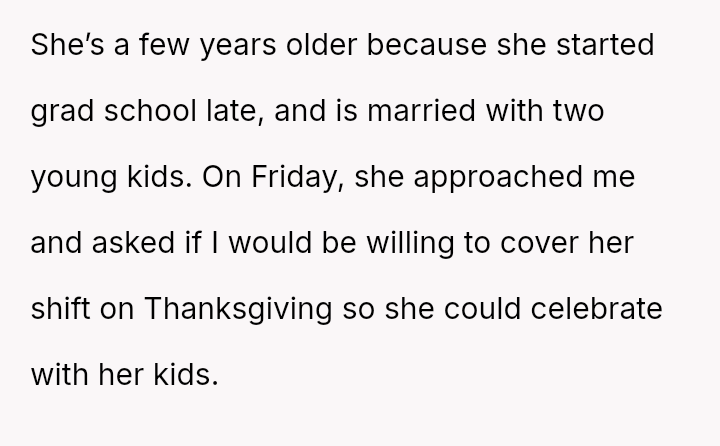
The original poster (OP), a 28-year-old woman, works at a job that requires 365-day coverage, meaning holiday work is common. Usually, newer employees are scheduled first for major holidays like Thanksgiving and Christmas.
There is also an unwritten rule that employees without children should cover shifts so that parents, especially mothers, can spend time with their families.
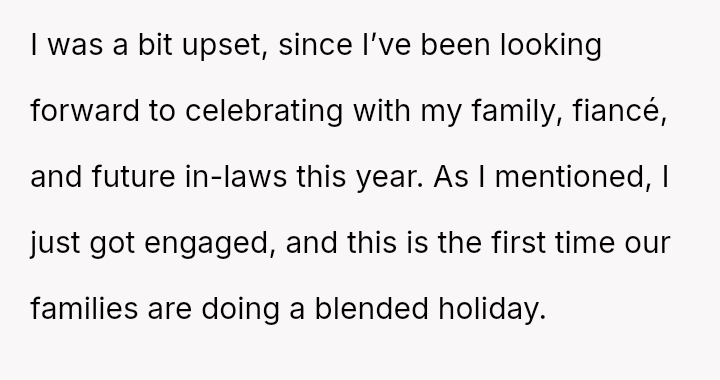
This year, the OP is scheduled to work Christmas but has Thanksgiving off, which she is excited about as it is her first holiday off and she plans to celebrate with her newly engaged fiancé and both families.
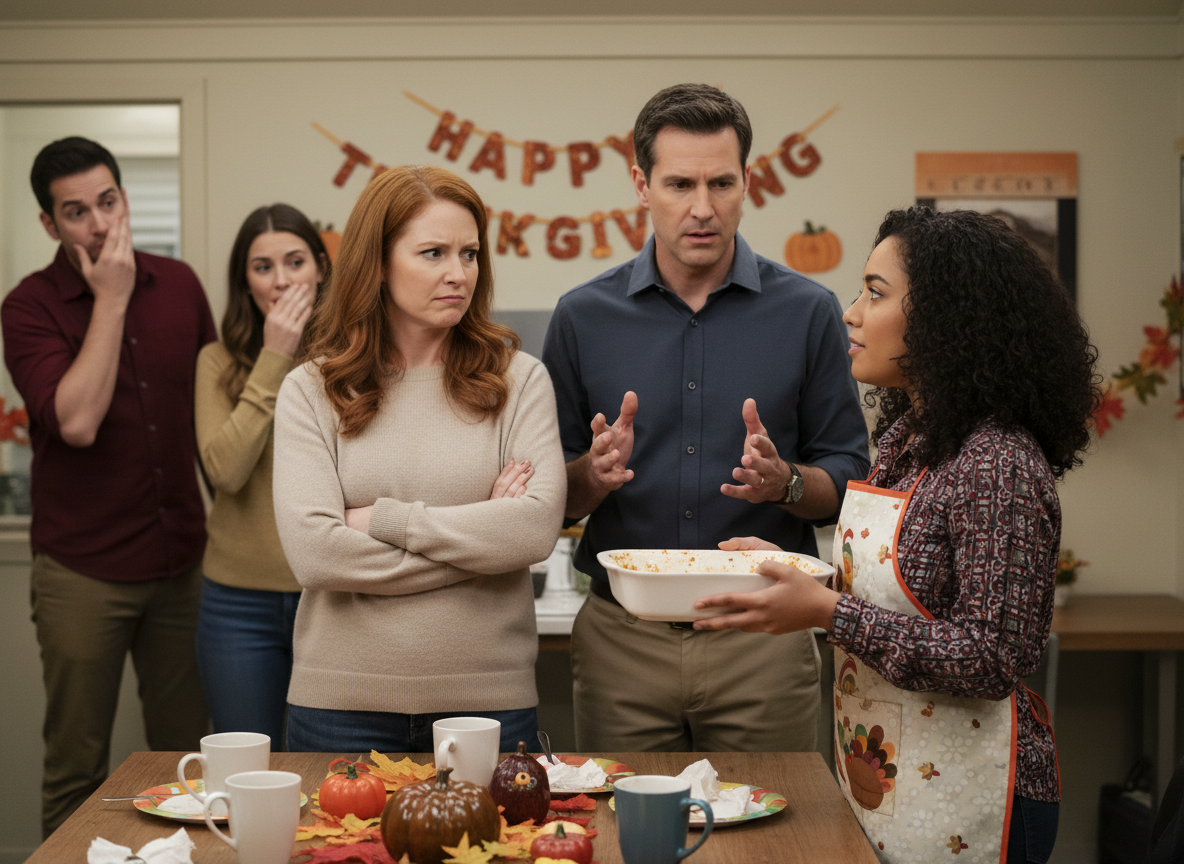
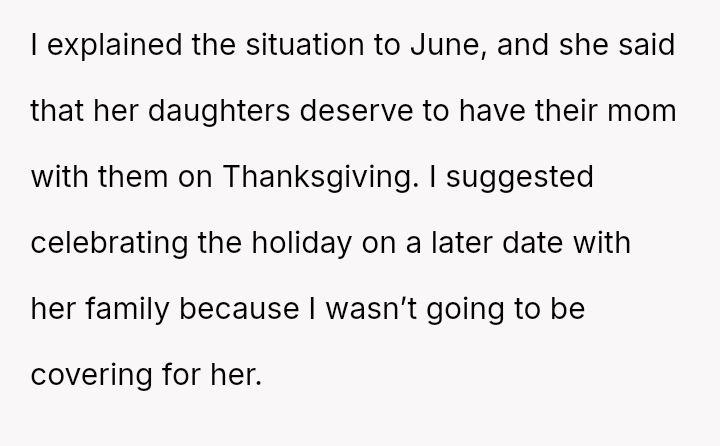
When a coworker, June, who has two young children, asked the OP to swap her Thanksgiving shift, the OP declined.
When the OP refused, June insisted her children deserved to have their mother there, and accused the OP of breaking the informal office code, leaving the OP questioning if her stance is fair.



Subscribe to our Newsletter
Get the latest stories delivered to your inbox.
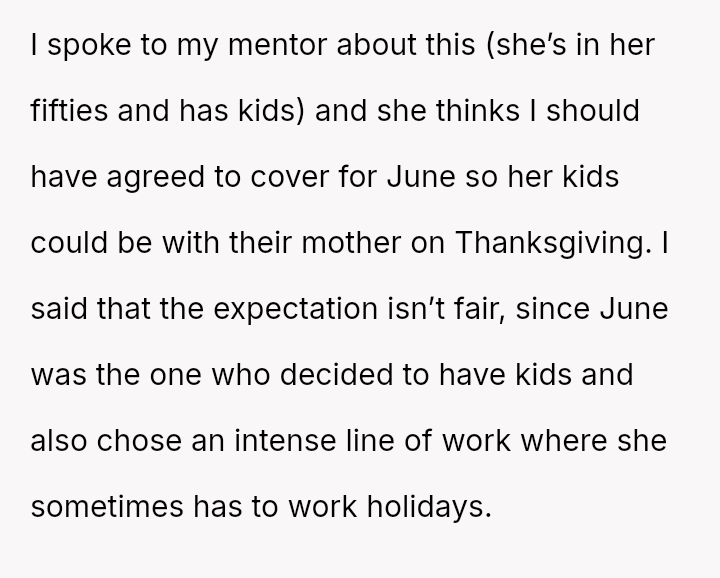
The central conflict revolves around the OP's desire to uphold her personal plans and resist what she perceives as an unfair workplace expectation that penalizes childless employees for the personal choices of parents.
While the OP values her public service role, she feels pressured to sacrifice her own important family celebration to accommodate a coworker who invoked parental obligation.
The core question for debate is where the responsibility lies: should workplace culture prioritize parental needs over individual time off ent*tlements, or should employees who choose parenthood manage the resulting scheduling conflicts without placing an undue burden on colleagues without dependents? Is the OP justified in prioritizing her own newly blended family celebration?
Commenters Came in Hot with Their Takes:
The crowd poured into the comments, bringing a blend of heated opinions, solid advice, and a few reality checks along the way.